
Dental Implants
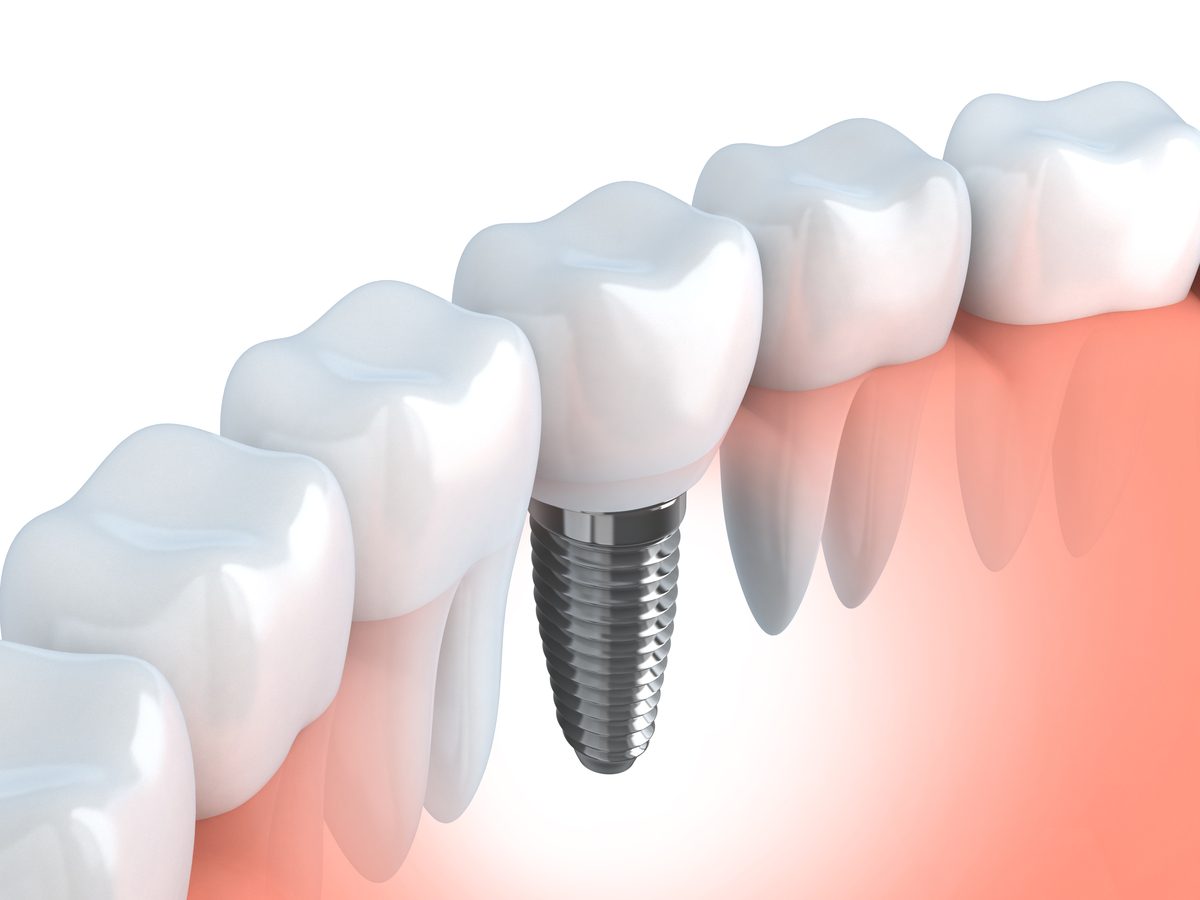
Dr. Chu places dental implants here in our Victorville office. His goal is to provide a new standard of care in creating exceptional results with minimal discomfort. He works closely with your restorative dentist to create a highly aesthetic and functional result.
How Missing Teeth Affect Your Health
A missing tooth can affect your confidence, but it can also have serious health consequences. Missing teeth can contribute to:
- Bone loss in the jaw
- Trouble chewing foods
- Chronic headaches due to changes in bite patterns
- Increased tooth decay and gum disease
- Diet restrictions when chewing becomes difficult, resulting in a lack of proper nutrition
The Success Rate of Dental Implants
The American Association of Oral and Maxillofacial Surgeons reports an overall success rate of about 95% for dental implants.
Advanced Dental Imaging
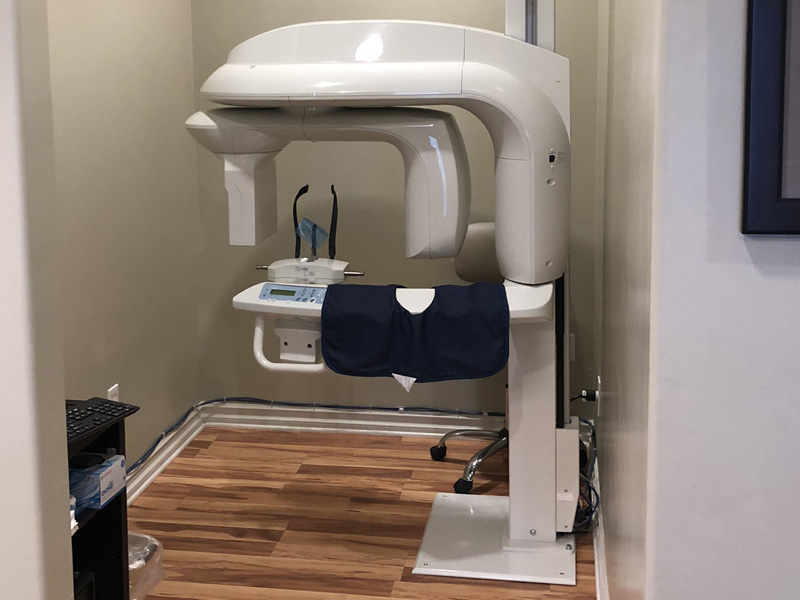
A key to dental implant safety and success is advanced radiography. Cone beam digital CT scanning allows us to take 3-dimensional, high resolution CT scans of your facial anatomy. We can then view these images from different angles, take precise measurements, and easily share 3-D data with other doctors. A CT scan ensures that every possible precaution has been made to reduce the risk of involvement of the nerves in the lower jaw, and the sinuses and nose in the upper jaw.
The scan is taken in this office. To read more about the advanced dental imaging we use, see Advanced Dental Imaging.
X-Guide Navigation and Cone Beam 3D Imaging
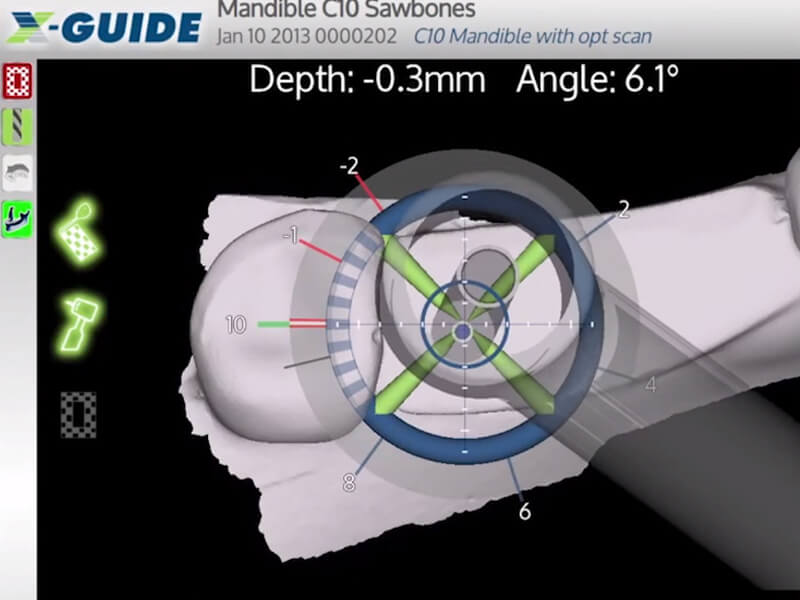
Dr. Chu uses X-Guide Dynamic 3D Navigation together with our Cone Beam 3D imaging. Your implant is planned on your own scan before the day of surgery, and you can look at that plan yourself. During the procedure, the system gives a full 360-degree view of the drill and your jawline, which helps keep the position, angle, and depth of the implant accurate.
Traditional implant surgery is done free-hand, with the surgeon viewing the site only from the outside. With X-Guide, it's like having an intraoral camera right on the surgical instruments.
Does the Procedure Hurt?
The discomfort involved with receiving a dental implant is similar to that of having a cavity filled. It is often done under local anesthesia and patients generally experience little discomfort after the procedure.
How Long Will Dental Implants Last?
Dental implants become fixed to the jawbone. Though the life span of a dental implant will vary with each patient, many have lasted for over 30 years. With good oral hygiene and regular cleanings, dental implants should last a lifetime. In contrast, the average life span of a traditional fixed bridge is between 10-15 years.
Bone Regeneration
A critical question in determining whether an implant can be placed is, "Is there enough bone to support the implant?" Fortunately, advanced bone regeneration techniques now make it possible to place many more implants than just 10 years ago. Learn more about bone grafting.
Preparing for Your Implant: Bone Grafts
If a tooth has been missing for some time, a bone graft may be needed to stabilize your implant. The healing time before an implant can be placed depends on the type of graft:
- Socket preservation: placed after an extraction to preserve the socket; typically 3 to 6 months of healing
- Ridge augmentation: rebuilds a jawbone that has already lost volume; typically 6 to 9 months
- Sinus lift: adds bone to the floor of the maxillary sinus for upper-jaw implants; typically 8 to 12 months
Am I a Candidate for Dental Implants?
Dental implant treatment begins with a consultation and a cone beam CT scan here in our office. Dr. Chu uses the scan to check whether there is enough bone to hold an implant, then tells you whether you are a good candidate.